
Two wardrobes might look identical in photos, yet their prices could differ by hundreds of dollars. The difference rarely lies in accessories like handles; instead, it is hidden within the unseen board material beneath the finish. This guide breaks down the five most common furniture board types, comparing them based on real-life priorities—moisture resistance, durability during moves, safety for children, budget, and indoor air quality—to help you decide exactly which board to use for each room in your home.
No jargon-heavy technicalities, no sales pitches—just the material expertise distilled from over 20 years of manufacturing experience at our factory.
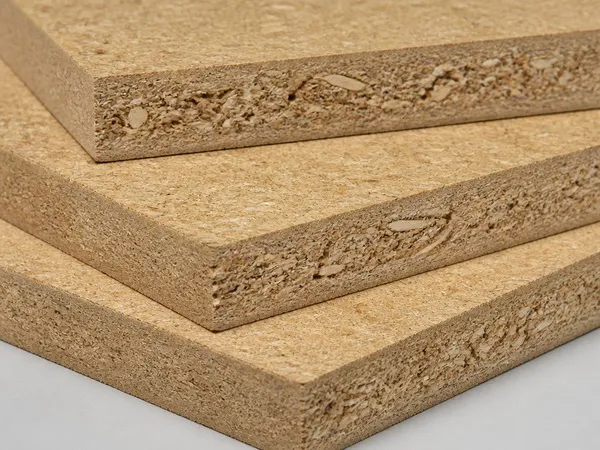
Particle board is made by bonding wood chips and shavings under high heat and pressure. It features a three-layer "sandwich" structure: fine particles on the outer layers ensure a smooth surface, while coarser particles in the core provide structural strength. It is the backbone of the global flat-pack furniture industry.
In real life: That cost-effective wardrobe, that office desk, or the TV stand you assembled yourself on a Saturday afternoon with an Allen key—these are likely made of particle board.
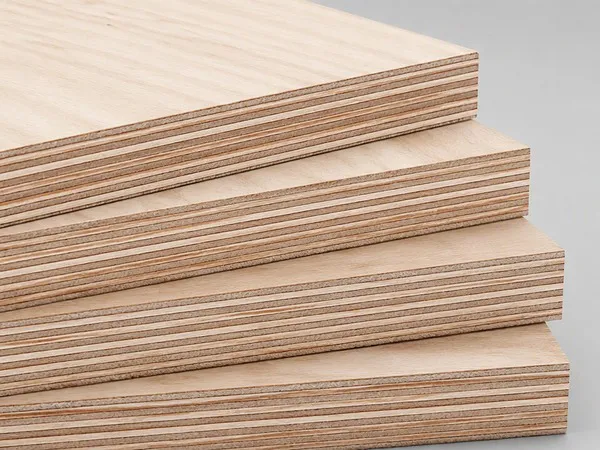
Plywood is constructed by gluing together an odd number of thin wood veneers, with the grain of adjacent layers rotated 90 degrees to ensure strength in all directions. Its signature feature is a cross-section with a "thousand-layer cake" striped pattern.
In real life: Plywood furniture is commonly found in under-counter kitchen cabinetry, sturdy bed frames that don't creak, and bathroom vanities designed to withstand daily water splashes.
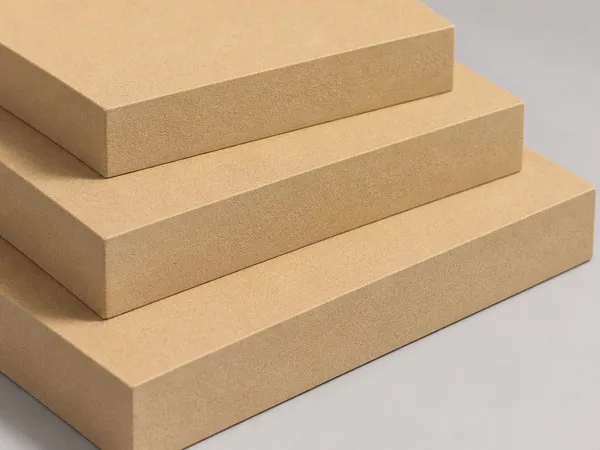
MDF is created by breaking wood down into fine fibers and pressing them into a completely uniform board with no visible grain; it offers the smoothest surface finish of the five types. In real life: Items such as those silky, lacquered Shaker-style cabinet doors, decorative moldings, speaker enclosures, and picture frames found in the home are typically made of MDF (Medium-Density Fiberboard).
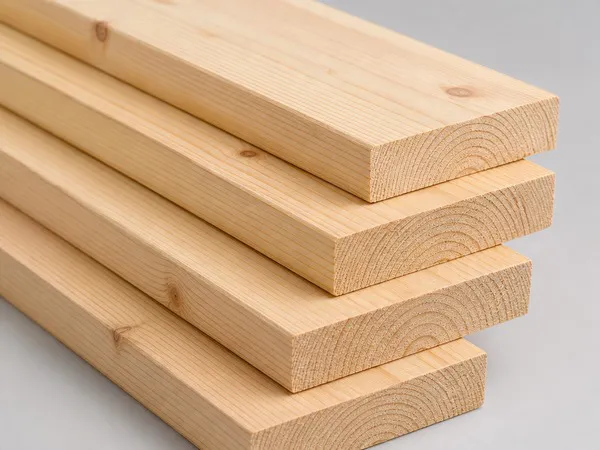
Solid wood is produced by drying and milling natural timber; the end grain reveals growth rings, and the wood grain runs continuously across the surface. Oak, ash, walnut, pine, and rubberwood are the most common materials used for furniture.
In real life: That dining table that has hosted a decade of Thanksgiving dinners, a bookshelf built to be passed down through generations, or a reliable baby crib—these are all made of solid wood.
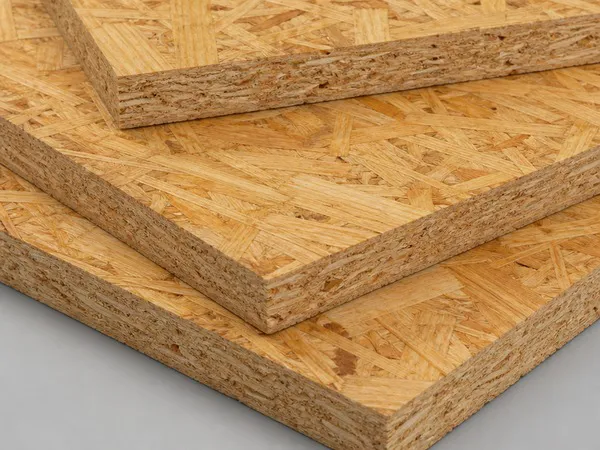
OSB is made by arranging long wood strands in alternating directions and hot-pressing them with resin (commonly MDI resin, which is formaldehyde-free). It has a rugged appearance and high structural strength, and in recent years, it has even become a statement of design style.
In real life: Garage workbenches, loft-style feature walls, and heavy-duty shelving units capable of supporting toolboxes are often made of OSB.
Plywood and solid wood excel in structural load-bearing, while OSB is a powerhouse structural board. Particleboard handles daily loads well, but unsupported shelves may sag over time. MDF offers high rigidity but is brittle and vulnerable to impact at specific points.
Top choices for load-bearing: Plywood / Solid Wood
Moisture is the "number one enemy" of furniture. Plywood is impervious to dampness, making it the standard choice for kitchens and bathrooms. Solid wood is moisture-resistant when properly finished but will expand and contract with humidity changes. OSB offers better moisture resistance than particleboard. Standard particleboard and MDF will swell if water seeps into unsealed edges—which is precisely why "edge-banding quality matters more than the board's name." Board selection for humid spaces: Plywood (or moisture-resistant MDF for lacquered door panels)
If you rent in a city, moving is a regular occurrence, and every move involves dismantling and reassembling furniture. Plywood and solid wood can withstand multiple assembly cycles; OSB has good screw-holding power; particleboard, when paired with high-quality hardware, can handle one or two moves; MDF edges are the weakest anchoring points.
Board types suitable for frequent moves: Plywood / Solid wood
MDF is a favorite among furniture makers for painting because it is flawless, grain-free, and can be milled into any shape; solid wood is the only material where the natural surface *is* the finish, and it can be sanded and refinished for a second life; particleboard performs excellently with melamine veneers or wood-grain foils; plywood surfaces require veneering or painting; OSB turns its own rugged, coarse-chip texture into an industrial-style aesthetic.
Top choice for lacquered furniture: MDF; Top choice for natural texture: Solid wood
If you have to carry boards up to a third-floor walk-up apartment, the experience will completely change your view of "fiberboard furniture." MDF is the heaviest; solid wood varies by species; plywood and OSB are moderate; particleboard is the lightest of the engineered woods.
Top choice for DIY furniture transport: Particleboard / Plywood
Particleboard offers the highest "functional density per dollar"—which is precisely why flat-pack furniture makes good design accessible to the masses. MDF and OSB fall into the affordable mid-range; plywood is significantly more expensive but pays for itself in humid environments or structural applications; solid wood is an investment, not just an expense.
Top choice for well-designed furniture: Particleboard; Top choice for durability: Solid wood
What truly matters isn't the type of board itself, but the glues and certifications involved in the furniture manufacturing process. Look for: US CARB Phase 2 / EPA TSCA Title VI compliance, formaldehyde emission ratings of E0–ENF / E1, and FSC-certified wood sources. MDI-bonded OSB contains no added formaldehyde; solid wood has the lowest natural emission levels. Another often-overlooked point: engineered wood products efficiently utilize fast-growing timber and recycled wood fibers, making them inherently sustainable choices.
Quick self-check: If a new board has a pungent odor, reject it immediately, regardless of the type.
Comparison Chart
|
Dimension |
Particleboard |
Multi-layer board |
MDF |
solid wood |
OSB |
|
Strength and load-bearing capacity |
●●○ |
●●● |
●●○ |
●●● |
●●● |
|
Moisture resistance |
●●○ |
●●● |
●○○ |
●●○ |
●●○ |
|
Nail holding power/repeated assembly and disassembly |
●●○ |
●●● |
●○○ |
●●● |
●●● |
|
Painted and milled finishes |
●●○ |
●●○ |
●●● |
●●○ |
●○○ |
|
Natural texture and renovable |
●○○ |
●●○ |
●○○ |
●●● |
●●○ |
|
Lightweight and transport |
●●● |
●●○ |
●○○ |
●●○ |
●●○ |
|
Cost-effectiveness |
●●● |
●●○ |
●●○ |
●○○ |
●●○ |
|
Best Role |
Cabinet and flat panel furniture |
Kitchen and bathroom, structural components |
Painted doors and decorative parts |
Heirloom-level single item |
Structural substrates, industrial wind |
Kitchen:
Plywood cabinet carcasses + lacquered MDF doors. This is a professional combination: use moisture-resistant, high-strength materials where water exposure is high, and materials with a flawless finish for visible surfaces.
Bathroom and Laundry Room:
Plywood bathroom vanities; use moisture-resistant MDF for door panels, and avoid standard particleboard near standing water.
Bedroom Wardrobe:
Certified particleboard carcasses with proper edge banding are a perfectly rational choice; if you want something to "last a lifetime," choose solid wood.
Home Office:
Choose plywood if you need to mount monitor arms or frequently rearrange the layout (due to superior screw-holding power); for light use—just a laptop and a desk lamp—a particleboard desk is sufficient.
Children's Room:
Prioritize environmental safety ratings over board type—insist on CARB P2 / E0 or better. Lacquered MDF offers rounded, safe corners; solid wood can grow with your child.
Living Room:
Use solid wood for the "showpiece" coffee table; use particleboard or plywood for TV stands and shelving units.
Garage and Workshop:
OSB and plywood—sturdy, practical, and affordable.
Rental Properties and Investment Renovations:
Particleboard maximizes cost recovery; use plywood for kitchens and bathrooms to protect your reputation and security deposit.
Loft/Industrial Style Accents:
Leave OSB boards exposed on walls or as tabletops—the wood chip texture is a design feature in itself.
"Particleboard = Junk."
Wrong. Modern, fully edge-banded, and certified particleboard can last over a decade in dry rooms without issues. The failures you’ve seen likely involved unsealed edges exposed to water leaks—that is a workmanship issue, not an inherent flaw in the material.
"MDF is toxic."
Emissions from MDF come from the adhesive system, not the fibers themselves. Certified MDF (CARB P2, E0) is safe for use in bedrooms and children's rooms. Look for certificates, not rumors.
"Solid wood is always best."
Solid wood expands and contracts with seasonal humidity. In a damp basement or an unheated cabin, a stable multi-layer plywood product might actually outperform it. Choose the board based on the room, not for the sake of appearances.
1. Edge banding:
Fully sealed edges with no peeling or lifting—this determines moisture resistance and longevity.
2. Thickness:
Standard cabinet body thickness is 18mm (¾ inch); thinner shelves will sag.
3. Certification documents:
CARB P2 / EPA TSCA Title VI, E0–ENF/E1; ask to see certificates for any claims of FSC certification.
4. Odor:
Pungent smell = walk away.
5. Hardware:
In flat-pack furniture, hinges, dowels, and cam locks are just as critical to longevity as the board material itself.
At Homedge, we have been manufacturing and selling furniture directly from the factory for over 20 years. The honest answer we give every buyer is exactly what you’ve just read: use the right board for the right application. Use multi-layer plywood for moisture resistance and load-bearing needs; choose certified particleboard for the best value; and select solid wood for heirloom-quality pieces.
Ask us which board is used in any of our quoted products—you’ll get a straightforward answer backed by certification documents.
Is multi-layer plywood stronger than particleboard?
In terms of structural load-bearing and screw-holding power, yes. However, for cabinet bodies in dry rooms, certified particleboard is perfectly adequate and comes at a lower price point.
Can MDF be used in the kitchen?
Yes, for lacquered door panels—it is the industry standard. For cabinetry near sinks and dishwashers, multi-layer plywood is the more reliable choice.
Which board is best for wardrobes?
Fully edge-banded, certified particleboard offers the best value; choose multi-layer plywood if you move frequently; opt for solid wood if you want a "lifetime" piece.
Is OSB safe for indoor furniture?
OSB made with MDI-based adhesives contains no added formaldehyde and is widely used indoors. As with any board material, check the formaldehyde emission certifications relevant to your target market.
Is solid wood furniture truly more durable?
Generally, yes—and it has the unique advantage of being refinishable through sanding. The trade-offs are the higher cost and sensitivity to humidity fluctuations.
Send your floor plan or design idea.Our team will provide professional solution.