
Why Plywood + MDF Is the Right Material Combination for Kitchen Cabinets
Homedge 20 August 2026
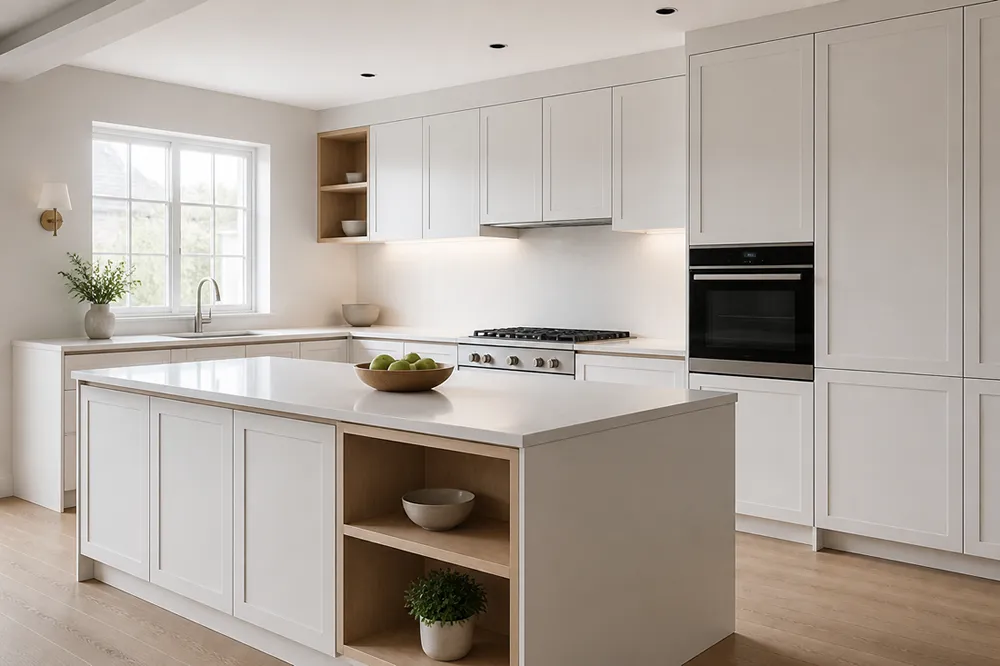
The professional approach to kitchen cabinet materials is this: plywood for the cabinet boxes, MDF for the lacquered doors. Plywood stands up to the steam, water splashes, and screw stresses of everyday kitchen life; MDF delivers the perfectly flat, machinable surface that a flawless lacquer finish is built on. "Plywood boxes + MDF doors" is the default configuration on most professional kitchen projects — and it is the "right answer" Homedge gives furniture buyers, not the "cheap answer."
Most furniture buyers make the mistake of treating the kitchen as one object and asking "which board is best?" In reality, it is two objects with two different solutions.
1. Two Components, Two Solutions
|
Component |
What It Faces Every Day |
What It Needs |
|
Cabinet boxes |
Steam, water splashes, sink leaks, the weight of dishes, screws driven in again and again during installation |
Moisture resistance, screw-holding power, structural rigidity |
|
Doors / drawer fronts |
Eyes, hands, grease film, high-frequency opening and closing |
A flawless surface, clean machined profiles, a stable finish |
Break the kitchen down by component like this, and most of the material debate resolves itself.
2. Why the Boxes Are Plywood
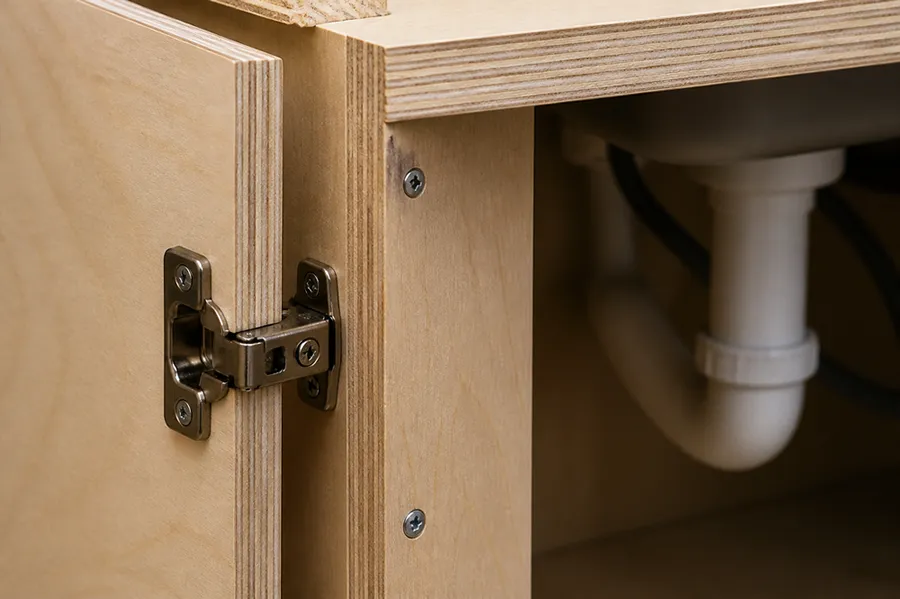
Moisture resistance. Cross-laminated veneer tolerates humidity and the occasional splash far better than particleboard or standard MDF. Under the sink is exactly where it earns its price.
Screw-holding power. Installation means screws — hanging rails, hinges, drawer slides, filler panels. Plywood keeps biting tight, round after round.
Rigidity. An 18 mm (3/4") plywood box will not sag under heavy loads and survives shipping and installation.
3. Why the Doors Are MDF
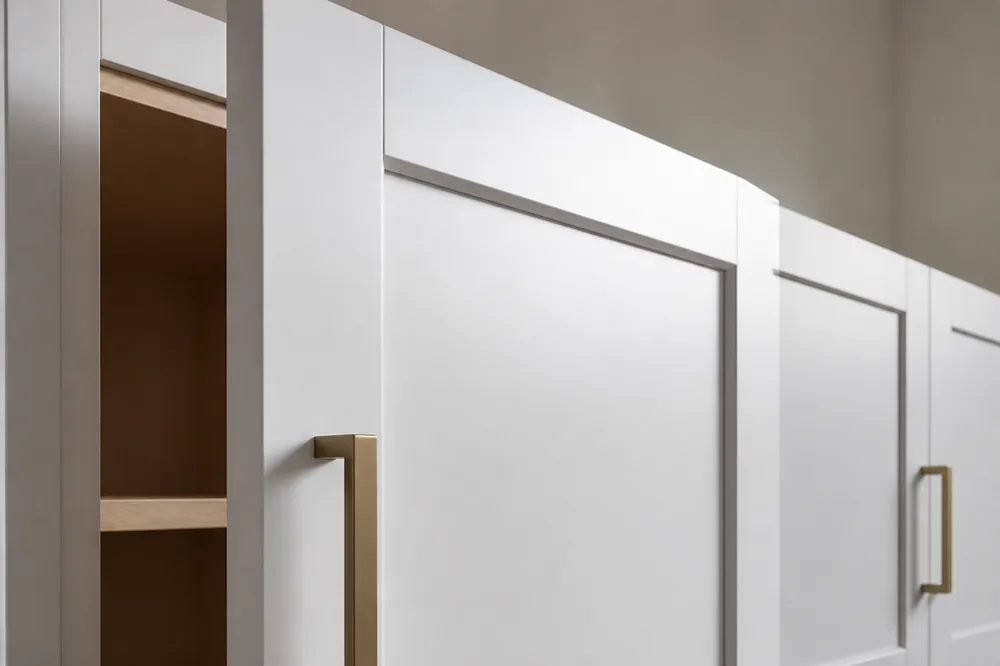
MDF has no grain, so no texture telegraphs through under a door's finish; Shaker profiles and decorative edges machine without chipping. Lacquered MDF doors are the industry standard. Two material-selection tips follow:
For cabinets near the sink or dishwasher, specify moisture-resistant MDF for the doors.
If you want the look of wood grain on a controlled budget, the door material is not painted doors — it is melamine-faced particleboard doors.
4. Where Particleboard Can Be Used in a Kitchen
Particleboard boxes with full edge banding and a certified environmental rating are a sound choice for dry kitchens and tight budgets — and the standard choice for rental and renovation projects. Particleboard's weaknesses are standing water and unsealed edges, and both are workmanship problems, not problems with the board itself. If a quotation does not state "full edge banding on every exposed edge," you need to ask why.
5. Why Solid Wood Is Not the Default for Cabinet Boxes
Solid wood expands and contracts with seasonal humidity. In a steam-heavy kitchen, that movement constantly works at the joints and the finish — while you pay a premium you will never notice on a box nobody sees. Save solid wood for the places you can see and touch: open shelving, island countertops, the dining table beside the kitchen.
6. The Professional Configuration at a Glance
|
Component |
Recommended Board |
Why |
Budget Alternative |
|
Base / wall cabinet boxes |
18 mm plywood |
Moisture resistance + screw holding |
Certified particleboard with full edge banding |
|
Lacquered doors |
MDF (moisture-resistant near water) |
Flawless finish, machinable profiles |
— |
|
Wood-grain doors |
Melamine-faced particleboard |
Wear-resistant, easy to clean, low cost |
— |
|
Open shelving / countertop accents |
Solid wood |
Natural texture, refinishable |
Plywood with wood veneer |
|
Toe kicks and filler panels |
Particleboard |
Out of sight, dry, low stress |
— |
7. The Factory View: How Homedge Configures a Kitchen
Homedge is a factory-direct custom cabinet manufacturer based in Chongqing, China, with 20+ years of exports to Europe and North America. Every kitchen quotation is itemized by component, specifying the board, thickness, and environmental rating of both boxes and doors. That is exactly the question worth asking any supplier — not "Is the quality good?" but "Which component, which board, what thickness, what environmental rating?" We supply OEM and millimeter-precision custom kitchens to importers, distributors, and project clients, with an average production lead time of around 30 days.
8. FAQ
Is plywood worth it for kitchen boxes?
Usually, yes — especially under the sink and in humid climates. The price difference is small relative to the cost of the whole kitchen, and the box is exactly the part where you cannot afford swelling.
Can I use MDF for the whole kitchen?
For lacquered doors: yes, that is standard practice. For boxes near water: not recommended — MDF edges swell when they meet water.
Plywood or MDF for the doors?
MDF for lacquer finishes; plywood or solid wood veneer if you want natural wood tones.
How thick should cabinet boxes be?
18 mm (3/4") is the professional standard; thinner boxes will cost you in hinge stability.
Share this Why Plywood + MDF Is the Right Material Combination for Kitchen Cabinets


More Blogs
Start Your Furniture Project Today
Send your floor plan or design idea.Our team will provide professional solution.