
What's the Best Material for a Wardrobe? Particleboard, Plywood, or Solid Wood?
Homedge 21 August 2026
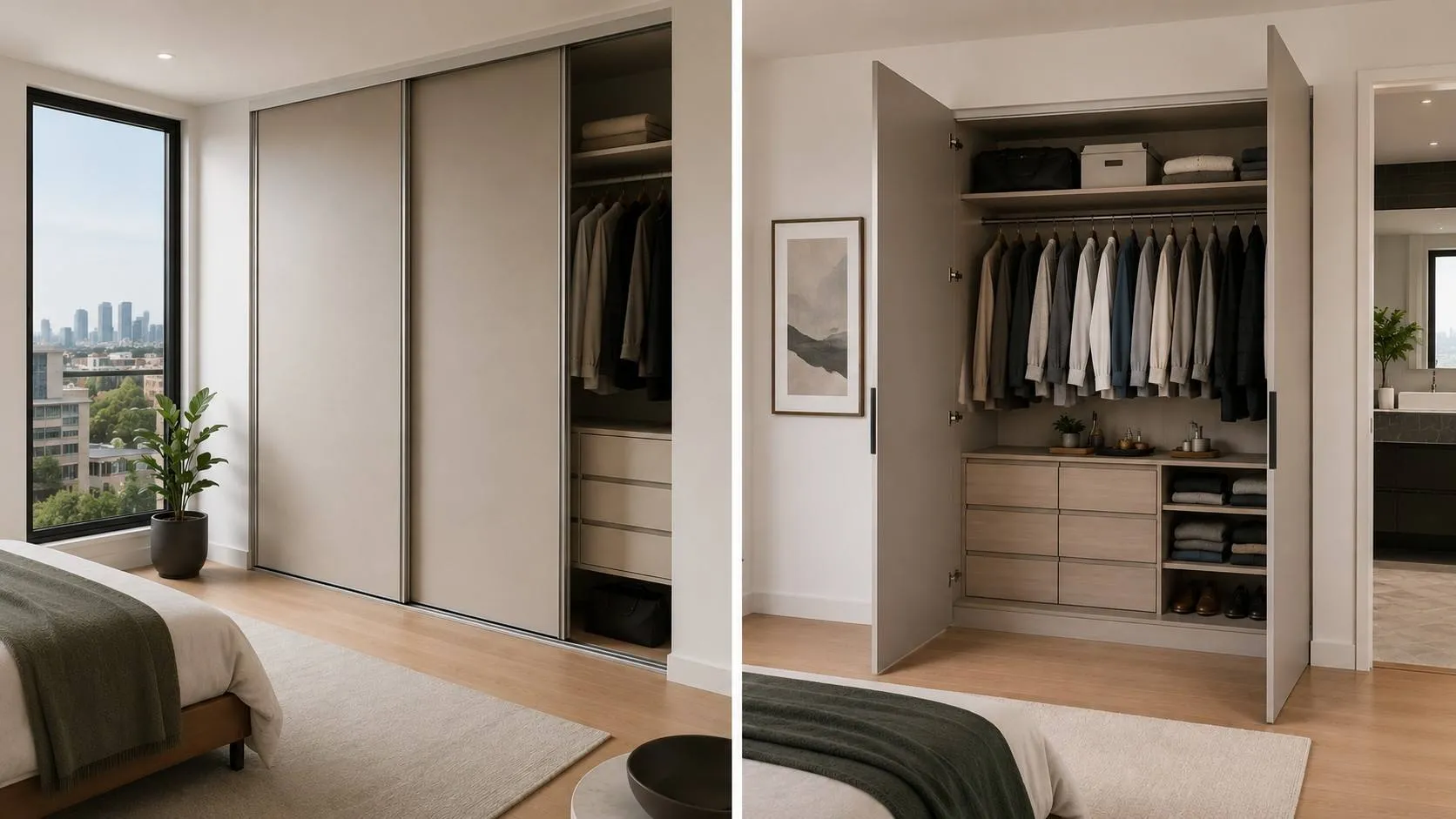
For most bedrooms today, the best choice is a fully edge-banded, certified 18 mm particleboard box; if you move often or the room tends to be damp, choose plywood; choose solid wood only when the wardrobe is meant to last for generations. For doors, choose MDF for lacquer and machined profiles, or melamine-faced particleboard for the best-value wood grain look.
A wardrobe is the most gently stressed piece of furniture in the home. It sits in a dry environment with static loads and no steam — so expensive boards are usually wasted here, while the weaknesses of cheaper boards rarely show up in these conditions. Matching the board to the wardrobe's real use environment is the smartest application choice.
1. The Real Load Profile of a Wardrobe
Static loads:Stacking zones and hanging rails — steady weight, but no impact.
Hanging rail pull:The rail and side panels take real pulling force every morning and evening.
Door cycles:Hinges open and close thousands of times or more.
Humidity in the air:Bedrooms are dry; there's almost no moisture exposure.
Note: none of the above involves steam, standing water, or heavy point loads — a wardrobe doesn't need marine-grade construction.
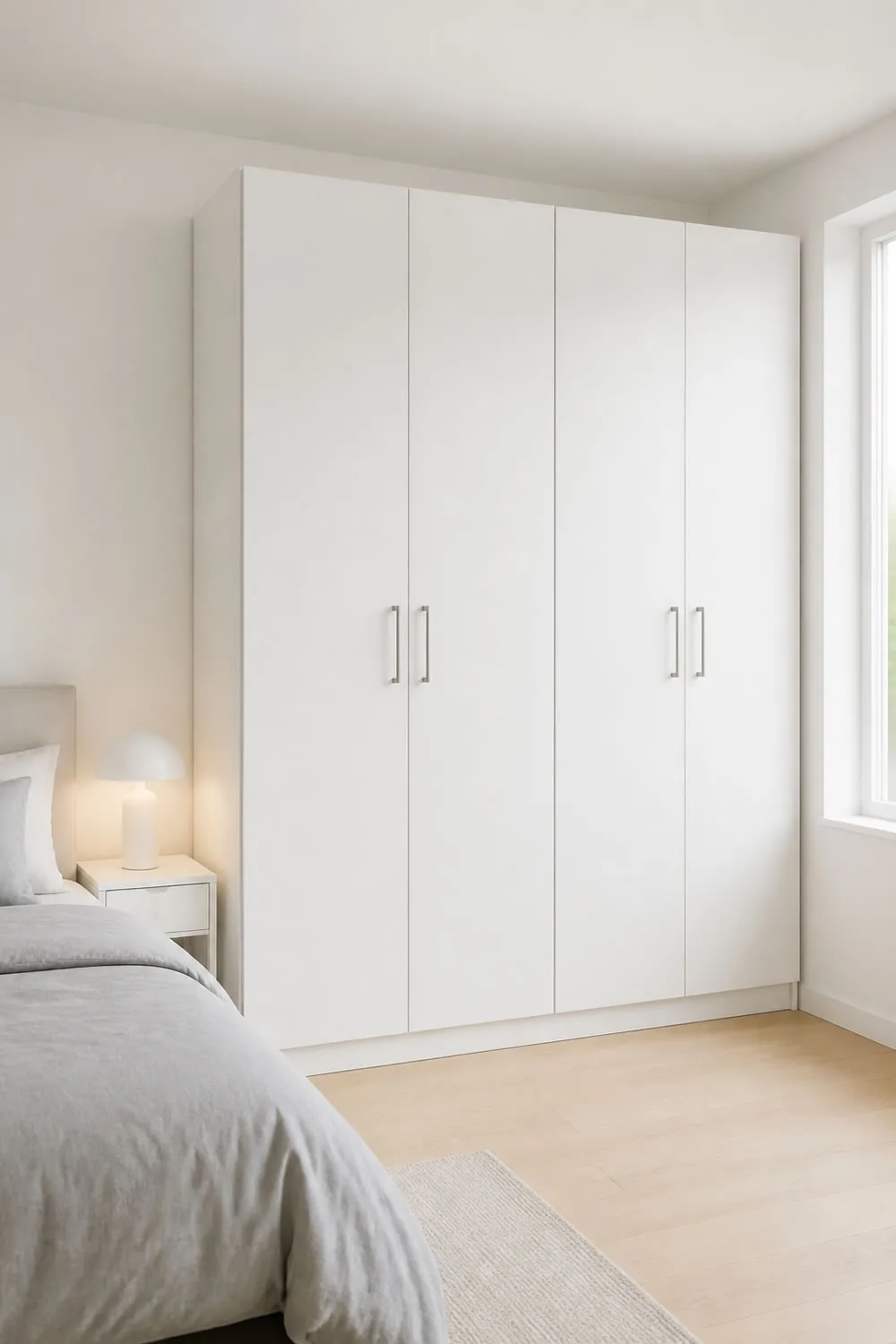
2. For Value, Choose Certified Particleboard
Modern fully edge-banded particleboard easily handles dry, static-load environments and lasts 10+ years. It is the standard value choice for custom wardrobes at every price point worldwide.
Two conditions are non-negotiable: edge banding on every exposed edge (moisture insurance for cleaning days and humid seasons), and an explicit environmental rating (CARB Phase 2 / EPA TSCA Title VI in the US; E0–E1 or higher in other markets) — because the wardrobe stands in the room where you sleep.
3. For Practicality, Choose Plywood
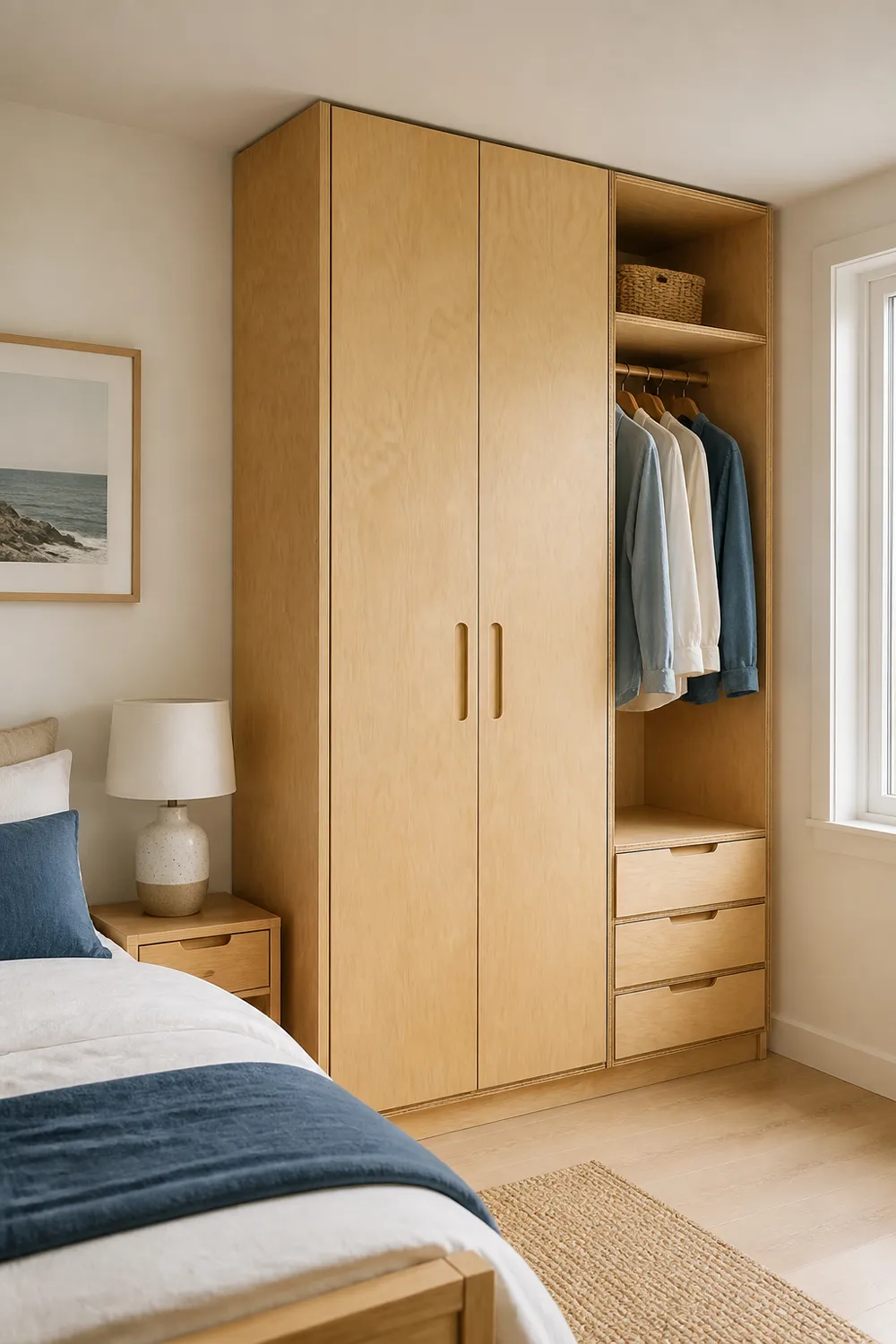
Two scenarios make plywood the first choice for a wardrobe:
You move often:Plywood's screw-holding power survives repeated assembly and disassembly. Particleboard with good hardware can still work after one or two moves, but generally not more than five.
Humid bedroom:In coastal homes, tropical climates, or ground-floor rooms with rising damp, plywood's moisture resistance gives extra peace of mind.
4. For Longevity, Choose Solid Wood
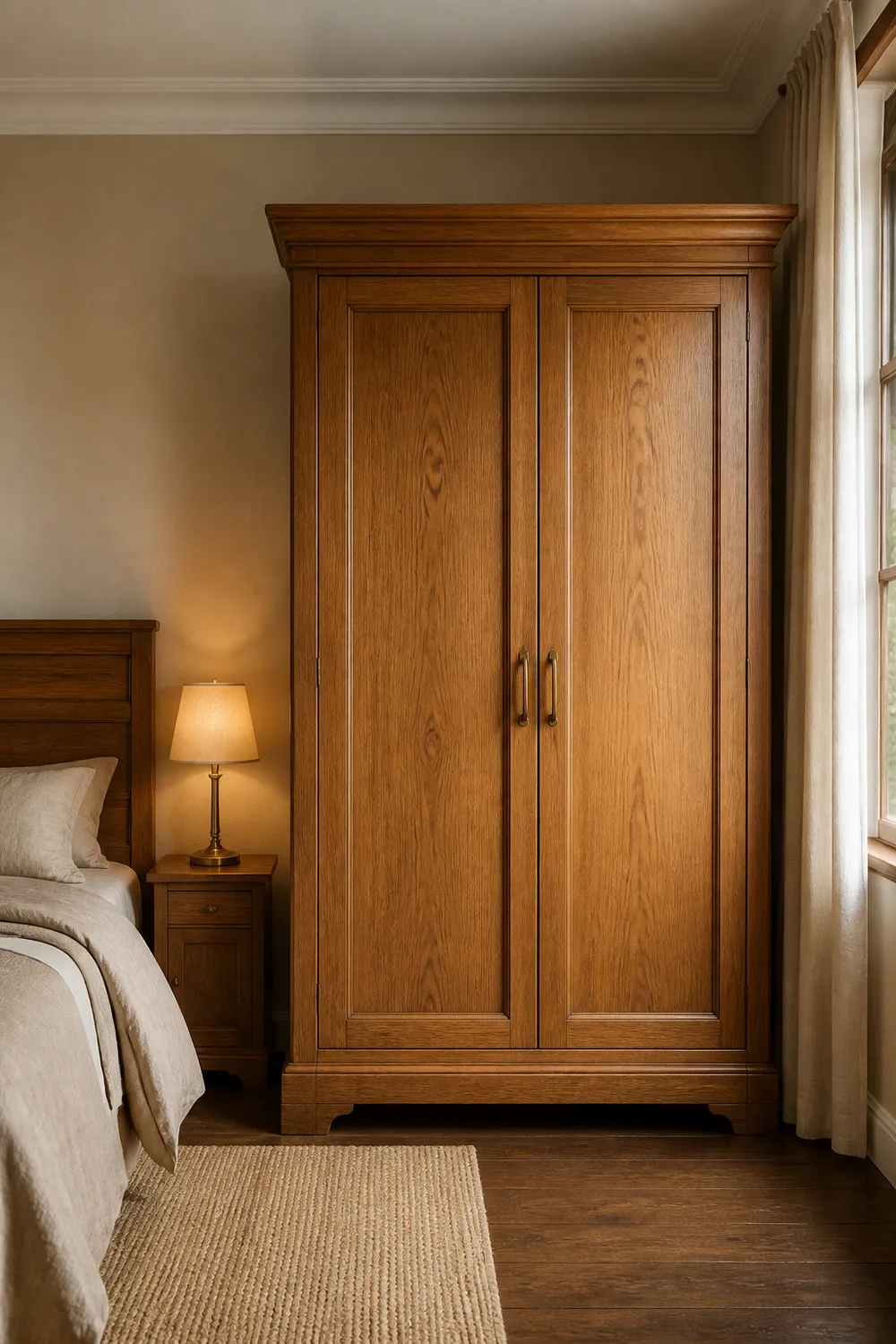
A solid wood wardrobe is the first choice when you want decades or even a century of service — it can be refinished, serves for decades, and offers natural texture. It is also the most expensive and the most sensitive to humidity swings. Buy it only when the piece is meant to outlive the room's current owner — don't make it the default.
5. Door Material Comparison
|
Door style |
Best board |
Why |
|
Lacquer, machined / Shaker |
MDF |
Flawless finish, clean machined edges |
|
Flat wood grain |
Melamine-faced particleboard |
Wear-resistant, affordable |
|
High-end natural look |
Plywood / solid wood veneer or painted |
Real wood grain, higher budget |
6. Dimensions Matter as Much as Material
Depth:
Standard hanging depth is 600 mm (24"); shallower boxes need pull-out hanging rails.
Shelf span:
Keep stacking-zone spans within about 900 mm (35") on 18 mm board, or add a center support — sagging is a geometry problem, not a material failure.
Hanging rail:
Fix it to solid side panels or a reinforced rail, never to a thin back panel.
7. Wardrobe Configuration at a Glance
|
Component |
Best value |
Upgrade |
Why |
|
Cabinet box |
Certified particleboard 18 mm, fully edge-banded |
Plywood |
Dry loads don't need premium boards |
|
Shelves |
Particleboard 18 mm |
Plywood |
Span control matters more than board type |
|
Lacquered doors |
MDF |
Solid wood |
Finish quality |
|
Wood-grain doors |
Melamine-faced particleboard |
Plywood with wood veneer |
Surface durability vs. budget |
|
Back panel |
6–9 mm slotted back panel |
— |
Industry standard |
8. How Homedge Builds Wardrobes
Homedge is a factory-direct custom furniture manufacturer with 20+ years of exports to Europe and North America. Cutting, edge banding, and pressing all happen in our own factory in Chongqing — so edge banding quality, the detail that determines a particleboard wardrobe's lifespan, is a controlled process, not a subcontractor's luck. Every wardrobe quote states the board, thickness, edge banding, and environmental rating, with millimeter-precision customization and an average production lead time of about 30 days.
9. FAQ
Is particleboard good enough for a wardrobe?
Good enough. In a dry bedroom, a certified, fully edge-banded particleboard wardrobe is the rational, industry-standard choice.
What board should wardrobe shelves use?
18 mm particleboard with controlled spans; choose plywood for heavy items or frequent moves.
What about wardrobes in humid climates?
Plywood box + moisture-resistant doors, plus room ventilation.
Should I buy a solid wood wardrobe?
If you want a wardrobe that lasts decades or even a century, yes. The premium on a standard custom solid wood wardrobe isn't value you can see with your eyes.
Share this What's the Best Material for a Wardrobe? Particleboard, Plywood, or Solid Wood?


Start Your Furniture Project Today
Send your floor plan or design idea.Our team will provide professional solution.