
Best Wood for Furniture
Homedge 14 September 2026
What Actually Makes a Wood "Best" for Furniture?
Four criteria decide it, in this order:
- Hardness and abrasion resistance — how the piece survives daily contact: chairs, doors, tabletops and drawer fronts take the punishment; shelves and decorative panels do not.
- Dimensional stability — how much the timber moves with humidity. Unstable species make doors that bind and frames that crack.
- Workability and finish — whether the species machines cleanly, holds a crisp edge and accepts the finish your design calls for.
- Availability and price — the best wood you cannot buy consistently at the grade you need is the wrong wood for a production run.
One myth worth clearing up first: "hardwood" and "softwood" are botanical categories, not hardness ratings. Hardwoods come from flowering (angiosperm) trees and softwoods from gymnosperms, and their actual hardness varies so widely that some hardwoods such as balsa are softer than most softwoods. (Source: Wikipedia — Hardwood)
The Species Comparison Table
Two notes on this table. Teak and mahogany are no longer freely available in the volumes they once were — over-exploitation has made supply scarce and prices volatile, so treat tropical premium species as a project-specific decision. (Source: Wikipedia — Hardwood) And rubberwood is not a compromise: it is plantation-grown and widely used for affordable solid furniture. (Source: Wikipedia — Rubberwood)
Which Wood for Which Furniture?
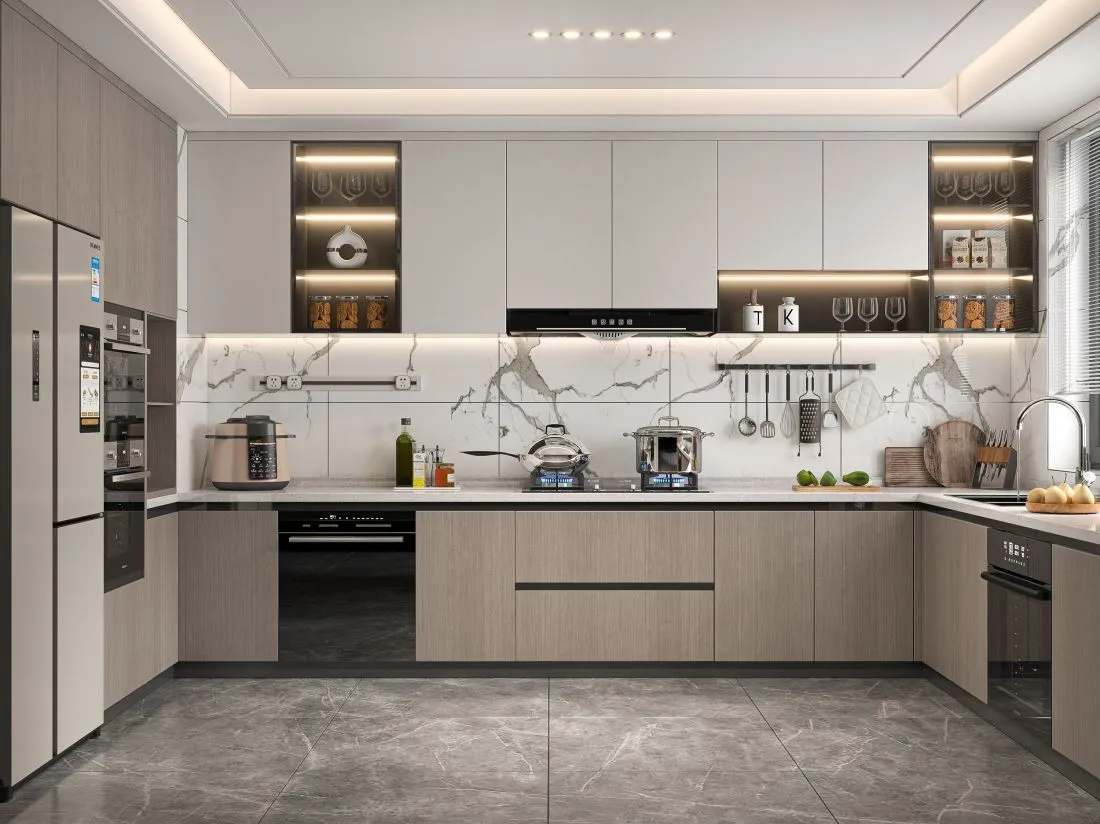
Kitchen cabinets. Solid wood is rarely used for the whole carcass — humidity and cost both argue against it. The standard build is a plywood or MDF carcass with solid or veneered doors. Where solid wood is used, oak and ash give the most durable frames, and maple is the best choice when the design calls for a painted finish.
Wardrobes. Oak, ash and walnut work well for frames and door fronts; the interior box is better served by engineered panels that stay flat. If your market is premium, walnut defines the price point; if it is volume retail, oak and ash give the best value in the mid-range.
TV walls and living room units. Large flat surfaces are the enemy of solid wood — they move. The practical specification is a stable panel core with solid wood frames and visible edges, which is where species choice is mostly about colour and grain matching.
Wine cabinets and humid environments. Humidity punishes unstable species. Teak's natural oils and dimensional stability make it the safest solid choice; everything else needs careful sealing and good ventilation design.
Hospitality and commercial furniture. Specifying for a hotel or restaurant means specifying for abuse: ash and maple frames, oak and walnut feature surfaces, and solid-wood edges where guests will touch the piece.
Solid Wood vs Engineered Panels
For custom furniture, the honest industry answer is that most "wooden" furniture is a combination — and there is nothing wrong with that. Even the hardwood door trade works this way: cheaper hardwood doors are a thin hardwood veneer bonded to a core of softwood, plywood or MDF. (Source: Wikipedia — Hardwood)
What matters is that the combination is specified deliberately:
- Panels that stay flat and paint beautifully: MDF
- Carcasses that survive humidity: plywood
- Structural sheathing and hidden cores: OSB
- Dry-room budget boxes with edge banding: particle board — see our guide to particle board vs MDF
- Furniture that has to survive repeated moves: see durable furniture materials for rentals
Solid wood belongs where it is seen, touched or loaded: frames, doors, legs, edges and feature surfaces. Panels belong where flatness, stability and cost matter more than grain.
What B2B Buyers Should Specify
Species name is the start, not the end of the specification. The four items that decide whether a bulk order matches its sample:
- Moisture content — the single biggest cause of failures in wooden furniture. Specify kiln-dried timber at furniture-grade moisture content and ask for the figure on the mill certificate, not "well dried". (Source: Wikipedia — Wood drying)
- Grade and match — how much sapwood, what colour range, and whether grain is to be matched across a set (critical for hotel and retail rollouts).
- Finish and sample approval — approve a physical sample in the actual finish, not a photo. Colour reads differently on oak, ash and walnut.
- Consistency across reorders — species and grade must be re-confirmed on every repeat order, not assumed from the first one.
How We Specify Wood at Our Factory
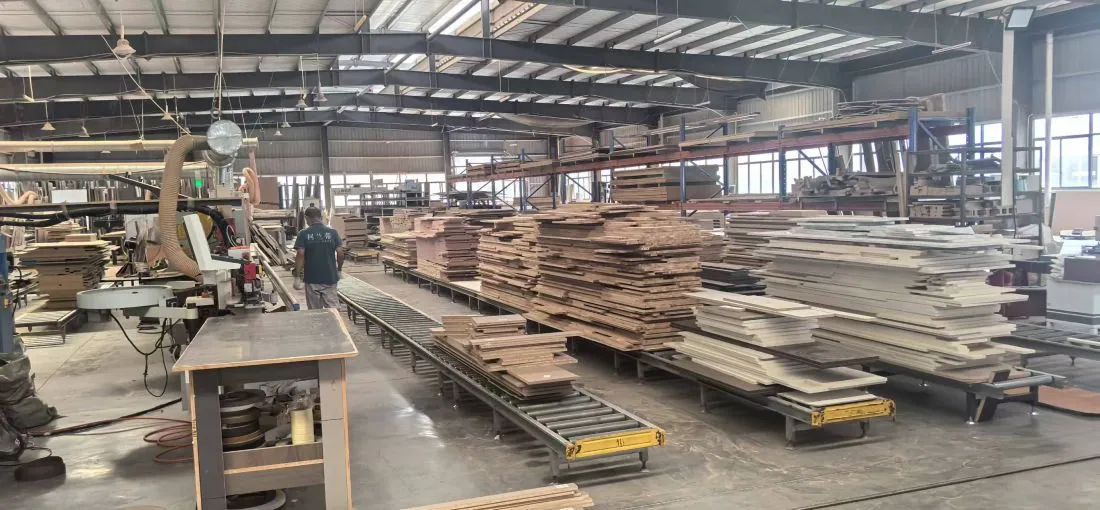
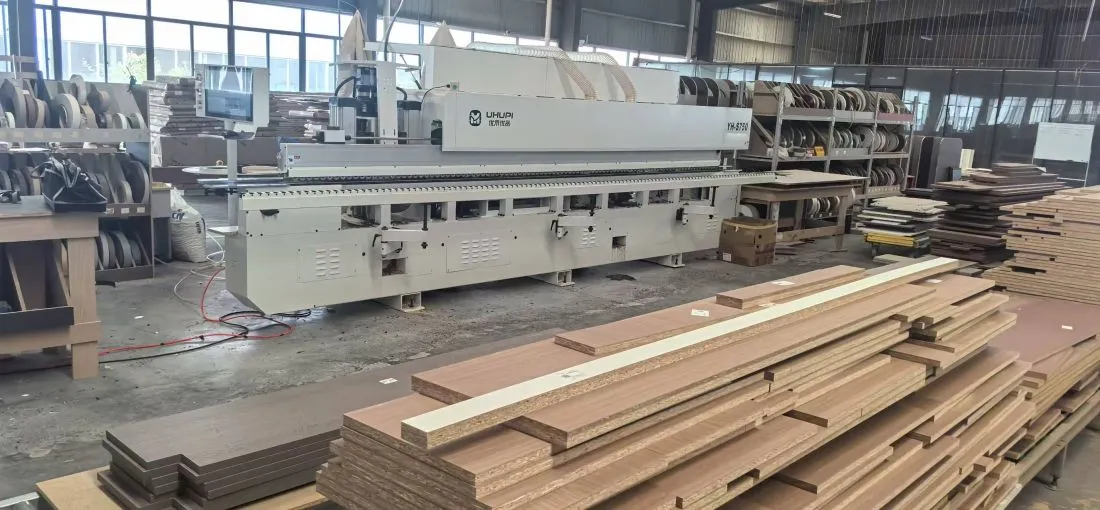
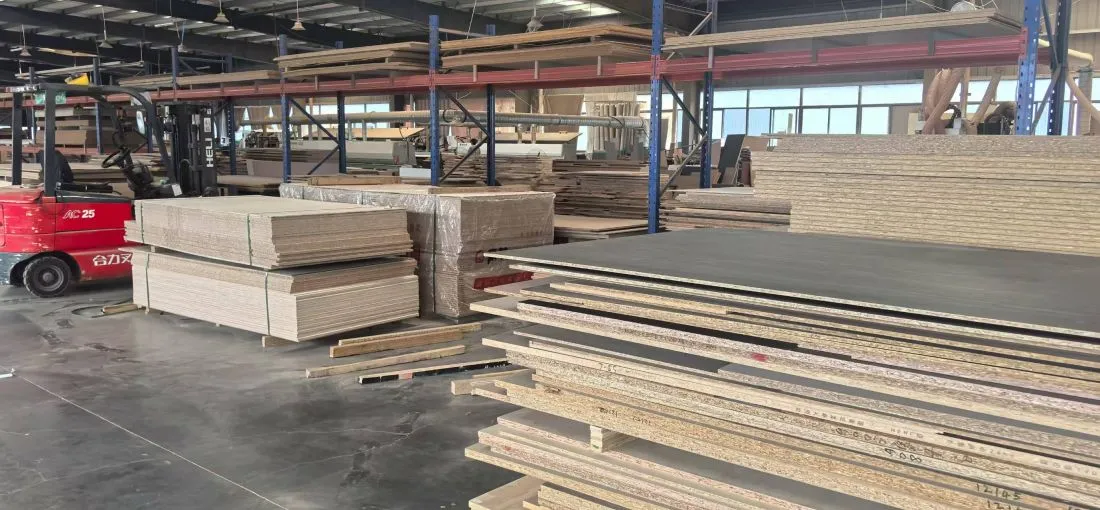
Homedge Furniture builds custom furniture in Chongqing for overseas retailers, design studios and hospitality projects. Our working logic:
Frequently Asked Questions
What is the best wood for furniture? It depends on use, moisture, finish and budget. Premium: walnut and oak. Hard-wearing commercial: ash and maple. Humid and outdoor: teak. Best value solid wood: rubberwood. Budget: pine.
Is oak or walnut better for furniture? Walnut is the premium choice — darker, calmer grain and a higher price point. Oak is harder-wearing, lighter in tone and better value; for hospitality and family use it is usually the smarter specification.
What is the best wood for kitchen cabinets? Not solid wood throughout. The durable build is a plywood or moisture-resistant carcass with oak, ash or maple doors — solid wood where it is seen, engineered panels where flatness and moisture resistance matter.
Is solid wood better than MDF or plywood? For frames, doors, edges and feature surfaces, yes. For large flat panels, carcasses and painted fronts, engineered boards are more stable, flatter and cheaper — that is why most quality furniture uses both.
What is the cheapest wood for furniture? Pine is the cheapest common solid wood; rubberwood is the cheapest that still looks and wears like proper furniture timber.
Which wood is most durable for furniture? For everyday abuse, ash, maple and oak. For humidity, teak. Durability also depends on the joint, the finish and the moisture content of the timber as much as the species.
Is rubberwood good for furniture? Yes, for solid-wood furniture in normal indoor conditions. It is plantation-grown, machines well and finishes cleanly; it is softer and less moisture-tolerant than oak or teak, so specify it for dry interiors.
Start Your Project
Planning a collection, a hotel fit-out or a custom residential project? We manufacture in solid wood and engineered panels under one roof in Chongqing, with species samples and finish boards available for approval before production. Send your drawings, quantities and target market — we will recommend the right species for each part and return a factory-direct quote with free design consultation.
Get a Free Quote · homedge@homedgefurniture.com · WhatsApp: +86 182 2388 2903
Sources: Wikipedia — Hardwood, Wikipedia — Rubberwood, Wikipedia — Wood drying.
Share this Best Wood for Furniture


Start Your Furniture Project Today
Send your floor plan or design idea.Our team will provide professional solution.